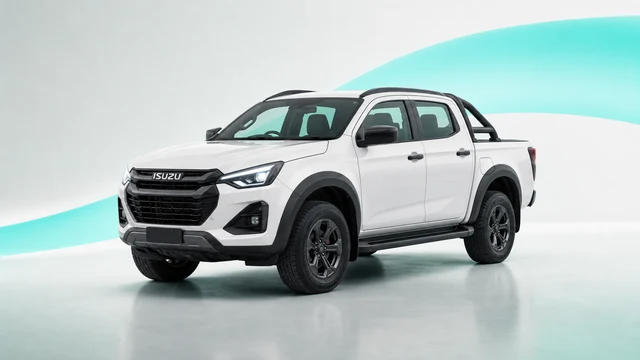
D-MAX Finance for Australian Businesses
Businesses prioritising reliability, lower operating cost and strong payload for daily trade and regional use.
D-MAX is commonly funded through commercial structures where the ute is used primarily for business. Borrowers choose between ownership-first structures and cash-flow-first structures depending on tax position, replacement cycle and monthly budget.
Comparing the vehicle before choosing a commercial structure? Review current Isuzu D-MAX variants and indicative repayments at BaseRate , another Velocity Works service. BaseRate covers vehicle research and car finance; this guide covers business finance structures.
Model-Specific Repayment Calculator
Start with realistic D-MAX settings and adjust purchase price, deposit, balloon, term, frequency and new/used assumptions before lodging your quote.
Preloaded D-MAX Settings
Typical price: $60,000 | Term: 3-7 yrs | Indicative rates: From 5.89%
D-MAX Commercial Specifications (Finance Focus)
Typical drive-away range $54,000-$72,000 Payload Up to 1135kg Towing capacity 3500kg braked Drivetrain 4x2 and 4x4 Transmission 6-speed auto or manual Typical commercial buyers Agricultural services, maintenance contractors, field technicians, trade businesses.
Running Costs and Ownership Planning
Finance decisions should include whole-of-life ownership cost, not just monthly repayment.
Fuel economy 7.6-8.5L/100km mixed use Servicing $500-$850 per interval Registration $1050-$1450/year by state Insurance and maintenance allowance Varies by postcode, driver profile and usage intensity Estimated annual ownership cost $10,200-$15,100 per year (fuel, rego, insurance, servicing)
Best Finance Structures for D-MAX
Structure Best for Commercial notes
Chattel Mortgage Ownership and tax planning Common for GST-registered businesses claiming GST credits and depreciation. Finance Lease Cash-flow management Suitable where lease rentals and planned upgrade cycles are preferred. Operating Lease Fleet turnover and lower upfront burden Can suit businesses focused on usage and replacement cadence over ownership. Business Vehicle Loan Straightforward repayment structures Useful where simpler structures and predictable repayment schedules are needed.
Balloon payments, deposits, trade-ins and refinance pathways are tailored per lender and vehicle profile.
Eligibility and Documents
Borrower type: sole trader, company, trust or partnership with ABN
Business use evidence and asset suitability for the selected finance structure
Credit conduct review, including explanations for prior adverse events where applicable
Supporting evidence: ID, ABN details, bank statements, BAS/tax records (low-doc or full-doc route)
Asset checks: age, condition, sale type (dealer/private) and valuation if required
Real Borrower Scenarios
Scenario 1 Regional service business financing a new D-MAX SX dual cab with low-doc statements and 15% deposit.
Scenario 2 Partnership purchasing a near-new D-MAX with a balloon to keep cash available for staff and inventory.
Scenario 3 Established sole trader refinancing a used D-MAX to consolidate a higher-rate unsecured loan.
FAQs Can I finance a used D-MAX? Yes. Used D-MAX vehicles are commonly financed if asset age and condition meet lender policy.
Is low-doc D-MAX finance available? Yes, many lenders offer low-doc pathways with bank-statement evidence for self-employed borrowers.
Can I finance through a partnership? Yes. Partnerships can apply with partner identification and financial evidence for servicing.
Can I include on-road costs? In many cases yes, including dealer delivery and approved government charges.
Is a balloon available for D-MAX finance? Yes, subject to term and residual guidelines that match the vehicle profile.
Can I refinance if business expands? Yes. Refinance can support cash-flow optimisation and debt restructuring as your business grows.