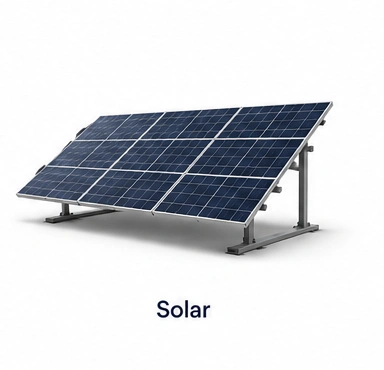
Finance commercial solar panels, battery storage systems, inverters, EV charging stations, and renewable energy infrastructure — with structures that let your energy savings cover the repayments from day one.
AFG Award Winner 2022 & 202510+ Years Specialist Brokerage
Why Finance Solar & Renewable Energy?
Commercial electricity costs in Australia have increased significantly, making solar one of the highest-ROI investments a business can make. A 100kW commercial solar system can cost $100K–$180K to install, but typically saves $30K–$50K per year in energy costs — delivering payback within 3–5 years.
Financing the system instead of paying cash amplifies the return: you preserve working capital, claim tax deductions on repayments, and the energy savings often exceed the monthly repayment — making the system cash-flow positive from installation.
With 25-year panel warranties and 10-year inverter warranties now standard, commercial solar is one of the lowest-risk assets a lender can finance — which translates to competitive rates and favourable terms for borrowers.
Solar’s long asset life (25+ years for panels) makes it ideal for longer finance terms. The right structure depends on whether you own or lease your premises and your GST position.
A chattel mortgage gives the business ownership while the lender takes security. An eligible GST credit and business-use interest or depreciation deductions may be available. Any immediate write-off depends on legislation in force and every eligibility test; model the transaction without assuming it.
Payments are potentially deductible, subject to current tax law and the taxpayer’s circumstances. At the end of the term, you pay the residual to take ownership. A good option for businesses that want to keep the system long-term but prefer to spread the tax benefit evenly across the lease term rather than taking a large upfront deduction.
Also known as a Power Purchase Agreement (PPA) when structured through an energy retailer. You use the solar system and return it at lease end. The asset stays off your balance sheet and every payment is deductible. Ideal for leased premises where you may not occupy the site for the full life of the panels.
Indicative Solar Finance Rates
Planning ranges checked 9 August 2026 • Not quotes, offers or comparison rates and subject to lender approval, credit profile, system size, and loan amount.
Structure
Indicative Rate Range (p.a.)
Chattel Mortgage (new systems)
6.29% – 9.49%
Finance Lease
6.29% – 9.99%
Operating Lease / Rental
By quote
Green Energy Loan (specialist)
5.79% – 8.49%
*Several lenders now offer “green finance” products with discounted rates for solar and renewable energy assets. These typically require CEC-accredited installation and Tier 1 panels. View our full rates guide →
Eligibility Requirements
Active ABN — GST registration preferred for chattel mortgage but not required
12+ months trading history (some green-finance products accept 6 months)
Clean personal credit history — no current defaults or judgments
Installer quote with system specifications, panel brand, and warranty details
Proof of property ownership or a long-term commercial lease (3+ years remaining)
Proof of income — BAS returns, tax returns, or bank statements
Assessment and settlement timing depends on the lender, application completeness, asset and seller checks.
Ready to Go Solar?
Get matched to brokers who specialise in solar and renewable energy finance across Australia.
Yes. Commercial solar systems from 10kW to multi-megawatt installations are routinely financed via chattel mortgage, finance lease, or operating lease. Most lenders view solar as a strong asset because it generates measurable savings from day one.
What deposit is required for solar equipment finance?▼
Many lenders offer solar finance with no deposit for established businesses. The energy savings generated by the system often exceed the repayment amount, making solar finance cash-flow positive from installation. Start-ups may need a 10–20% deposit.
Is commercial solar eligible for the instant asset write-off?▼
Yes. Solar panels and battery systems purchased under a chattel mortgage may qualify for the instant asset write-off, letting you deduct the full cost in the year of purchase (subject to the current ATO threshold). You may also be eligible for Small-scale Technology Certificates (STCs) that reduce the upfront cost.
How do STCs and government rebates work with finance?▼
Small-scale Technology Certificates (STCs) are generated when you install an eligible solar system. Your installer typically assigns the STCs to a registered agent in exchange for a point-of-sale discount, reducing the amount you need to finance. The discount is applied before the finance contract is drawn up.
What is the payback period for a financed commercial solar system?▼
Most commercial solar systems achieve payback within 3–5 years when financed. Because the monthly energy savings often exceed the monthly finance repayment, many businesses are cash-flow positive from installation. The exact payback depends on system size, electricity usage, tariff rates, and the finance structure chosen.
We use cookies to improve your experience and analyse site traffic. Essential cookies are always active. You can choose which optional cookies to allow. Cookie Policy · Privacy Policy
Essential
Required for the website to function. Always active.
Analytics
Help us understand how visitors use the site (Google Analytics).
Functional
Remember your preferences such as calculator inputs.
Marketing
Used for advertising conversion tracking (Google Ads).